
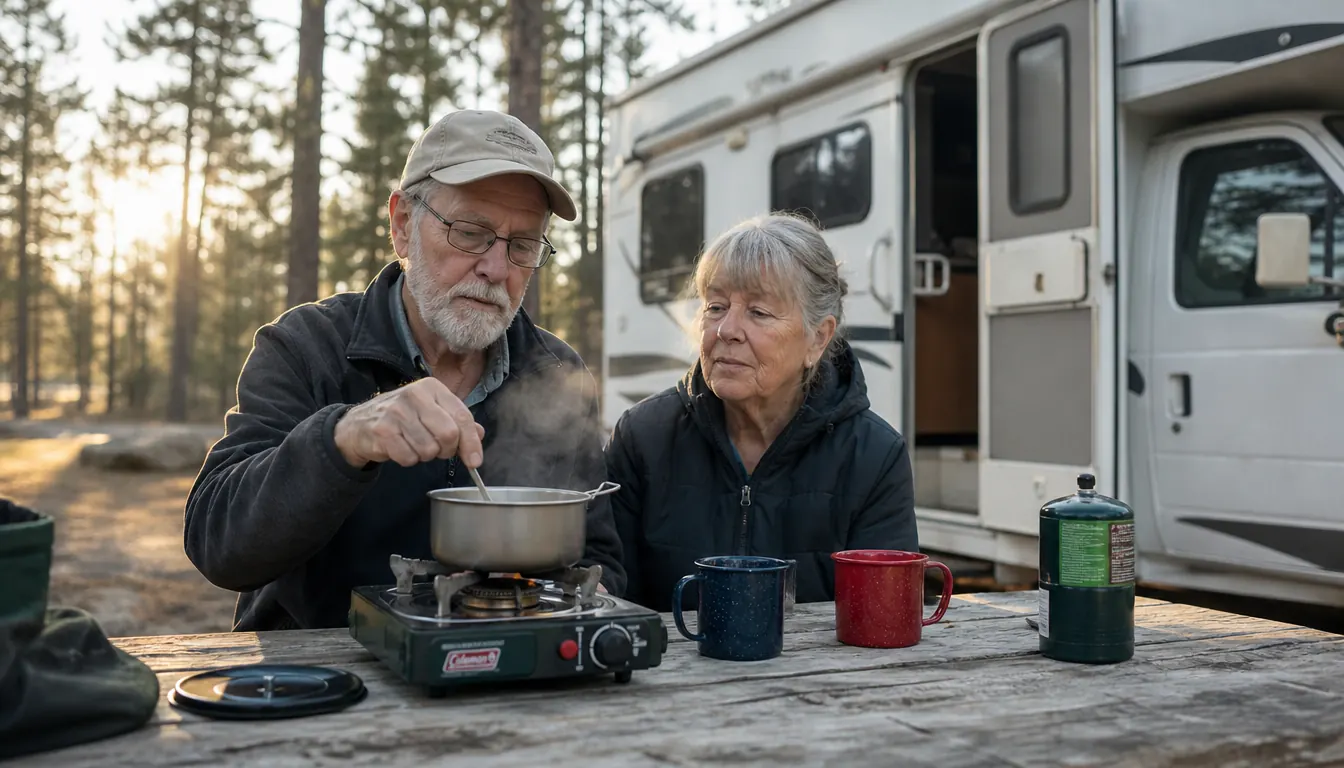
The first summer we traveled in the rig, I cooked every meal inside. By August I had learned something unpleasant: a 25 foot Class C holds heat like a thermos. Twenty minutes with the two-burner propane cooktop going and the whole coach was ninety degrees, and it smelled of bacon until the next morning. Ray would come back from a walk and ask what I had burned. Nothing, I told him. That was just lunch, hanging in the curtains.
So in the summer of 2024 we bought a Gas One GS-3400P and put it in the outside storage bay. It was the first of the five cooking pieces we now carry, and two summers on it is still the one I would replace first if it walked off. It is a single burner, 13.5 inches long and 4.45 inches tall, and it runs on butane canisters or a 1 lb propane cylinder with the adapter that comes in the box.
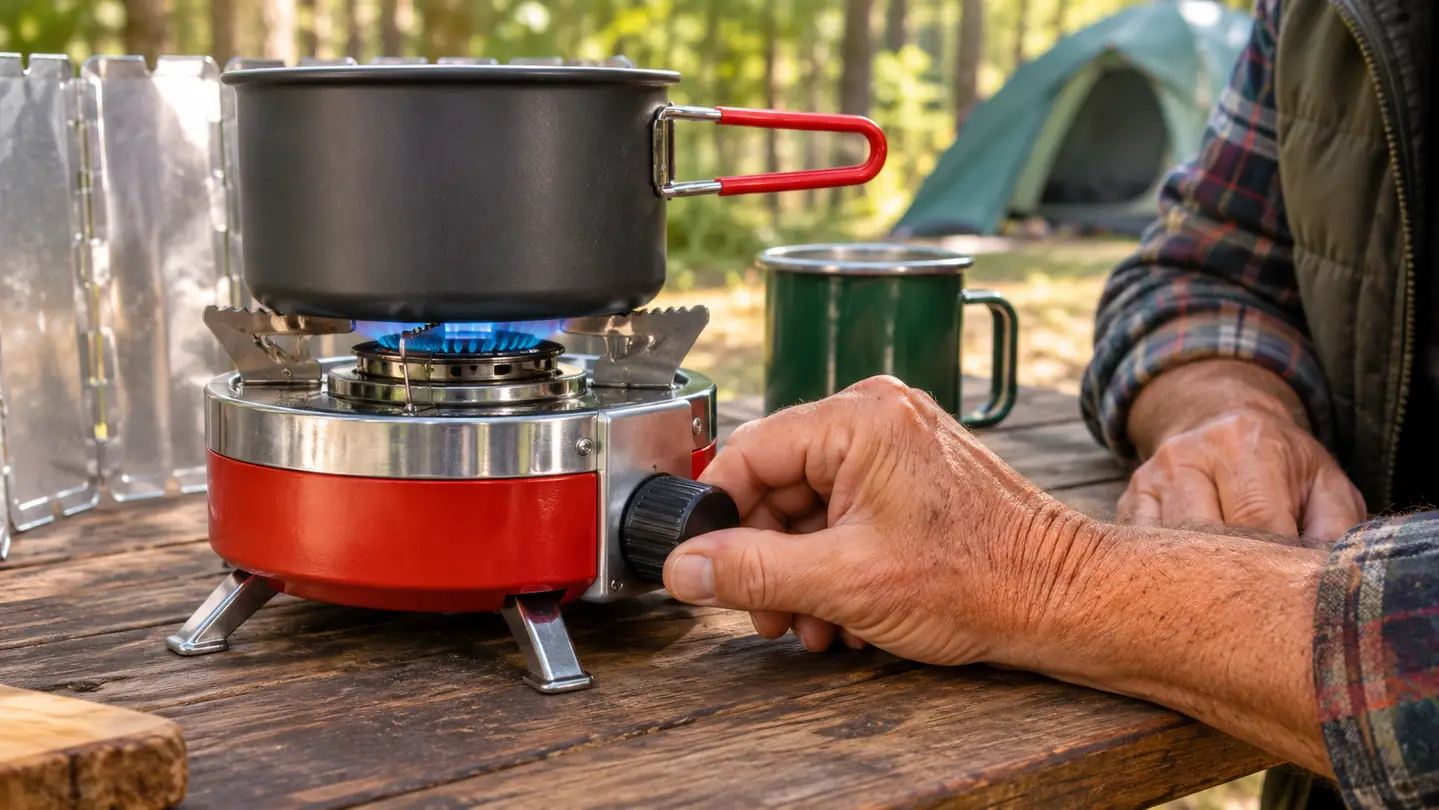
What changed was not the food. It was the inside of the coach. Cooking moved out to the picnic table, and the galley went back to being a place where I chop and store and wash up instead of a place where I sweat through dinner. That is a small thing to say out loud, but it was the difference between a trip we enjoyed and a trip we endured.
Here is what I did not expect. Ray started cooking again. At home in Salem he had always run the grill, and on the road he had drifted out of the kitchen because there was no room for two people in a four foot galley. Out at the table there is room. He does his own thing on his own burner now, and I do mine, and we talk while we work the way we do at home.
The Gas One stove itself is a plain thing, and I mean that as praise. There is a heat dial on the front and a piezo ignition, so I am not hunting for matches in a wind. The whole unit weighs 3.1 pounds. It stores in its own plastic carry case, which is why it lives in the outside bay without getting banged up against the cast iron.
Twenty minutes with the inside cooktop running and the coach hit ninety degrees. Now dinner happens on the picnic table and the rig stays cool.
The simplest fix for a galley that turns into an oven by nine in the morning
Single burner, dual fuel, piezo ignition, 3.1 pounds, and it packs into its own case in the outside bay. Two summers of daily use and ours has not missed a meal.
Amazon Check Today's Price on Amazon →I should be honest about how it behaves, because I read a great many reviews before we bought and most of them were written by people who had owned one for a weekend. The weakness is wind. A single burner out in the open does not care for a breeze, and at a lakeside site in the Columbia Gorge I watched a pot of water take twenty minutes to come up. I fixed it the cheap way. I fold a piece of heavy foil into an L and set it on the upwind side of the burner, and that is the end of the problem. Do not overbuild it. Foil is enough.
The Gas One does one job and it does not pretend to do more. It heats a pot. It holds a low flame under a pan of rice if you stand there and watch it, which is what I do, because there is no timer on this stove and no sensor and no dial that remembers anything. You turn the dial and you watch the pot, the way people have always done. I have come to like that part more than I expected to.
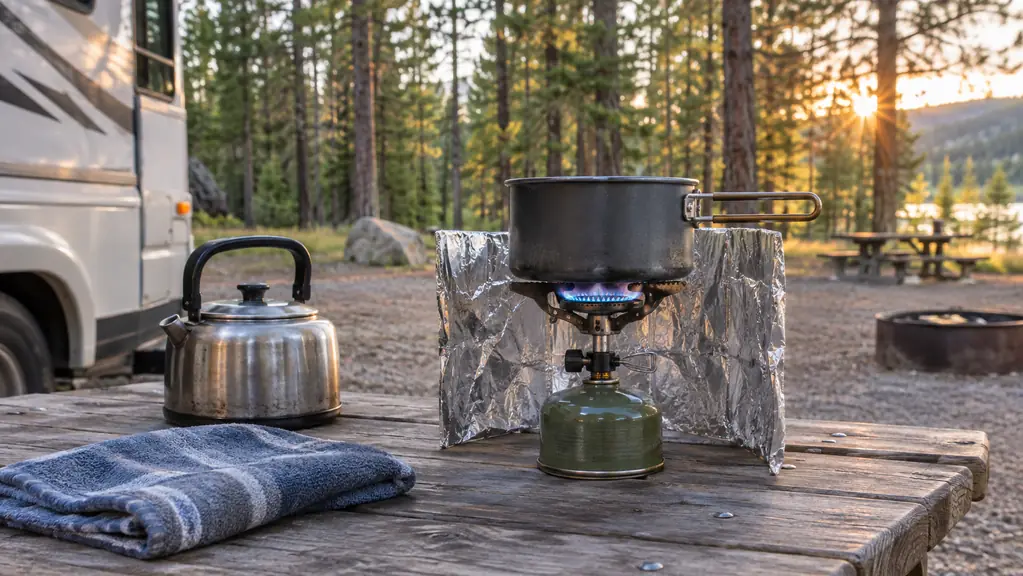
We also use it as a second burner when both inside burners are busy, which happens more than you would think on a holiday weekend. It will take my 5 quart Lodge Dutch oven, the heaviest pot we carry at thirteen pounds. I would not want to cook a long stew on a single camping burner all afternoon, but for browning meat before the pot goes onto Ray's coals, it does the job and it does it outside.
Fuel is the other thing to plan for. The butane canisters are not on every campground shelf, and a cold morning is a bad time to find out you are down to nothing. Ray keeps two cylinders in the bay and I keep a note in my phone when we drop to one. That little bit of bookkeeping has saved us more dinners than any gadget we have bought.
What I'd Tell You If We Were Sitting at My Kitchen Table
If you are standing in an RV aisle trying to decide, I would say this. Buy it for what it does to your rig, not for what it does to your dinner. As a stove it is a stove. It makes a flame, it holds a low one if you pay attention, and it weighs about as much as a hardback novel. What you are really buying is the ability to cook outside your coach on a ninety degree afternoon without opening every window and running the fan for an hour afterward.
And I would tell you to plan for two things I did not plan for. Bring a windscreen, even a homemade one out of foil. And do not expect it to replace the cooktop inside. It is not a replacement. It is the burner that keeps the indoor cooktop from turning your coach into an oven in July. That is the whole case for it, and it is a good one.
One more piece of plain advice. If you regularly cook for four or more at the campsite, one burner will frustrate you and you should look at something with two. If you want a stove with a box built around the flame, this is not that stove. But if it is you and one other person, and you want to eat well without heating the whole rig to do it, I would buy this one again tomorrow. Two summers in, ours has not given us a single problem, and I still get a small satisfaction setting it up on the table while Ray fusses with the fire.
Two summers, one burner, and a coach that finally stays cool
The Gas One GS-3400P weighs 3.1 pounds, lights with a piezo ignition, and carries its own case. It is the first thing I would buy again for the outside bay.
Amazon See the Gas One GS-3400P on Amazon →