
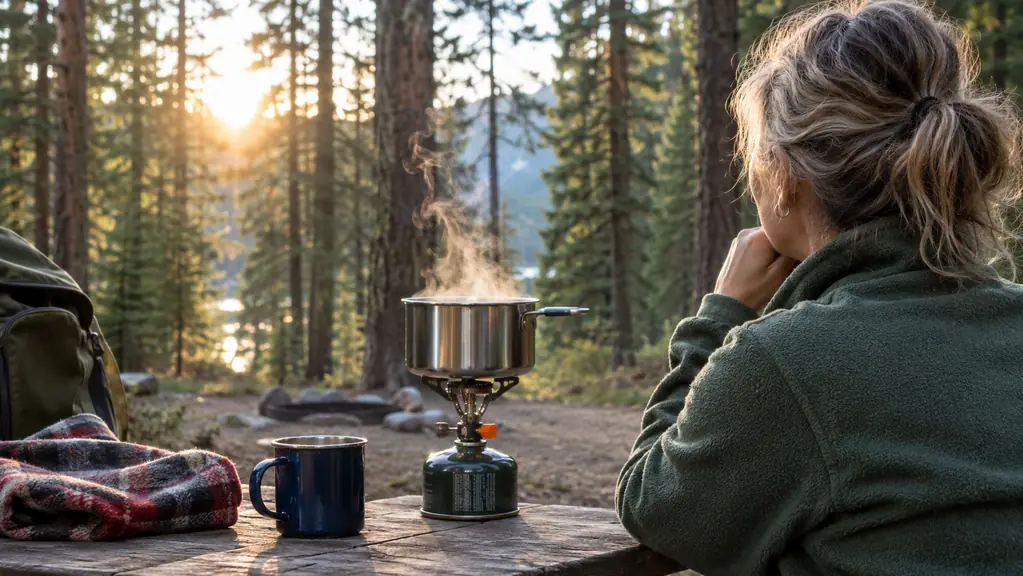
Two summers ago I bought a Gas One GS-3400P for one reason. I wanted to fry bacon outside so the inside of our 25 foot Class C motorhome would not smell like a diner for three days. That was the whole plan. What happened instead is that the stove moved into the outside storage bay and never left, and it now comes out at nearly every campsite we pull into, from a wet week on the Oregon coast to a January stay outside Tucson.
My name is June Halvorsen. I am 67, a retired school librarian from Salem, Oregon, and my husband Ray and I have traveled part of every year in this rig since 2021. I am not a gear tester. I am a woman with one narrow galley drawer, one overhead cabinet, a 6 cubic foot fridge and a water tank that runs dry faster than I would like, who cooks two meals a day and has no room for equipment that disappoints. What follows is what roughly two years of regular use actually looks like, including the parts I do not love.
The Quick Verdict
It lights on the first click, packs into its own case at 3.1 pounds, and runs on whichever fuel I can find. The flame is at the mercy of the wind and the stove brings no shield of its own.
Amazon Check Today's Price →The stove that lives in a storage bay and still lights on the first click
Dual fuel, piezo ignition, an adjustable heat dial and 8,000 BTU in a 3.1 pound package that comes with its own carry case.
Amazon Check Today's Price on Amazon →How I've Used It
We bought it in the summer of 2024. It is the oldest of the five cooking pieces we carry, older than the detachable handle cookware set, older than the cast iron Dutch oven, older than the containers we use for leftovers, and it has outlasted nothing because it has never needed replacing. It lives in its plastic carry case in the outside storage bay, on a shelf above the Dutch oven's padded bag, and it comes out when the weather is decent enough to cook at the picnic table.
The reason it comes out so often is not romance. A 25 foot motorhome heats up fast when you run two propane burners inside, and in July the galley turns into a sauna by the time the onions are soft. Cooking outside keeps the rig cool and keeps the smell of bacon and fish out of the upholstery. Once the Blackstone griddle joined us in the spring of 2026, the two of them split the work: the griddle handles breakfast and burgers, and the Gas One handles the pot of water for coffee, the saucepan of soup, the skillet of potatoes, and anything I want at a hard boil.
Ray uses it too, usually when I am inside doing something else and the water for the French press needs to come up fast. Neither of us treats it gently. It gets set on picnic tables that are not level, wiped with a damp cloth when it cools, and shoved back in the case while there is still a little heat in the grate. Two years of that and the case has a scuff on one corner and the stove still works.
One morning last September at a state park outside Bend sticks in my mind. It was 41 degrees when I walked to the picnic table, and I had a pot of water, a bag of oatmeal and a husband who wanted coffee before he wanted conversation. The stove lit, the water came up, and I had two bowls and a full French press on the table in under fifteen minutes. That is not a dramatic story. It is the entire reason the thing stays in the bay.
What the Dual Fuel Setup Actually Means at the Picnic Table
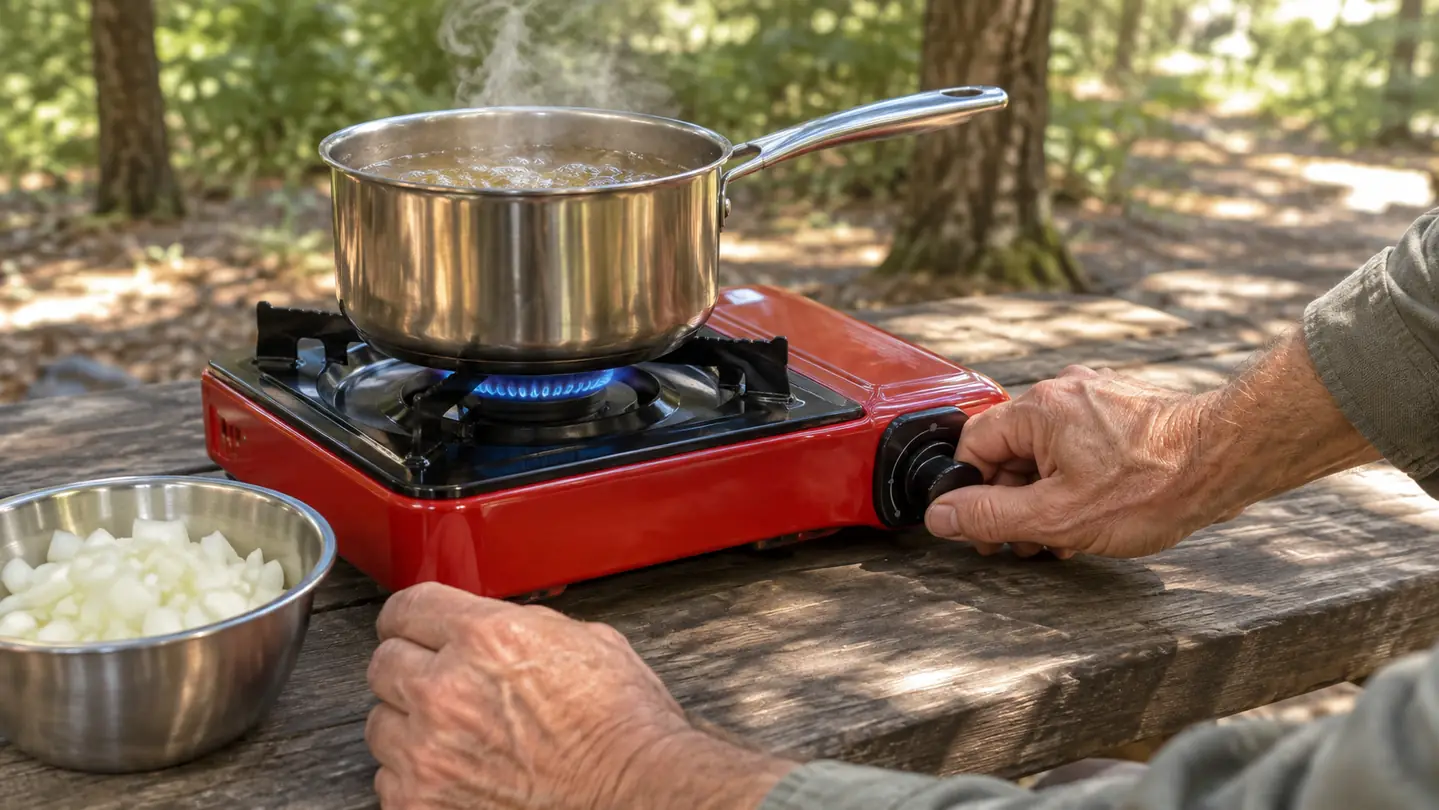
The GS-3400P runs on butane canisters or on a 1 pound propane cylinder, and Gas One includes the adapter for the propane. That sounds like a marketing line until you are in a small town where the hardware store carries one fuel and not the other. We have bought butane four packs at an Asian grocery in a strip mall and propane cylinders at a feed store, and the stove did not care. The adapter lives in the carry case in its own little bag so it does not get lost, which matters more than it should at our age.
Here is the practical difference I have learned the slow way. Butane canisters are simple, quiet and tidy, and they slide into the case easily. But butane loses pressure when the temperature drops, and a canister that boils water in eight minutes in August will sulk on a cold October morning. Propane keeps working when it is chilly. So from roughly November through March I run propane, and in the warm months I run butane because it is easier to store and easier to buy in bulk. That is not a fault in the stove. That is how the two fuels behave.
The first cold snap we hit was in January outside Tucson, and I did not yet understand any of this. I had two butane canisters and a pot of soup, and the flame came up low and orange and stayed that way. I thought the stove was failing. Ray, who spent thirty years around machinery, took one look and said the fuel was cold. We brought the canister inside, let it come up to room temperature for an hour, and the stove behaved perfectly. Now the canisters ride in the heated part of the rig in winter.
The other thing worth knowing is that I now carry both. One butane canister for a fast pot of coffee, one small propane cylinder for a cold morning when the butane will not cooperate. It costs me a little storage space and it has saved more than one breakfast. If you only ever camp in the summer, you can ignore this whole section and buy whichever is cheaper where you live.
The Piezo Ignition and the Heat Dial, Months Later
The stove has a piezo electric ignition, which means no lighter and no matches, just a knob you turn and a click. On a windy picnic table with a spatula in one hand, that is worth real money. In two years of use I would guess we have lit it well over three hundred times, and it still sparks on the first click the great majority of those times.
The adjustable heat dial runs from a low flame that will hold a pot of chili at a bare simmer to a wide flame that gets a quart of water rolling in a few minutes. Gas One rates the maximum output at 8,000 BTU. For one burner on a picnic table that is respectable without being reckless, and it means I can boil pasta for two without standing there for a quarter of an hour. Ray has set the 5 quart cast iron Dutch oven on it to keep a stew going when the campfire coals were misbehaving, and it held the weight and the heat without complaint.
Two honest notes. First, piezo igniters are not magic. In very damp weather, or after the stove has sat in a cold storage bay for a month, mine sometimes needs a second click or a third. I keep a long handled lighter in the case as insurance and I have used it maybe a dozen times. Second, the low end of the dial is a little fierce for delicate work. If I want to melt butter or hold a sauce barely warm, I set a cheap heat diffuser plate on the grate first. That is an extra piece to wash, and it solves the problem entirely.
Breakfast is where the dial earns its keep in our camp. I do a skillet of diced potatoes and onions most mornings, and with the dial turned a little above halfway they brown in about twelve minutes without scorching, as long as I keep them moving with a metal spatula. The first week I had the flame too high and got a dark crust on the outside and hard centers, so I learned to back it down. A quart of water for the French press comes to a boil in a few minutes at the wide setting, and I have timed it more than once out of curiosity.
Wind, Weight, and the Carry Case
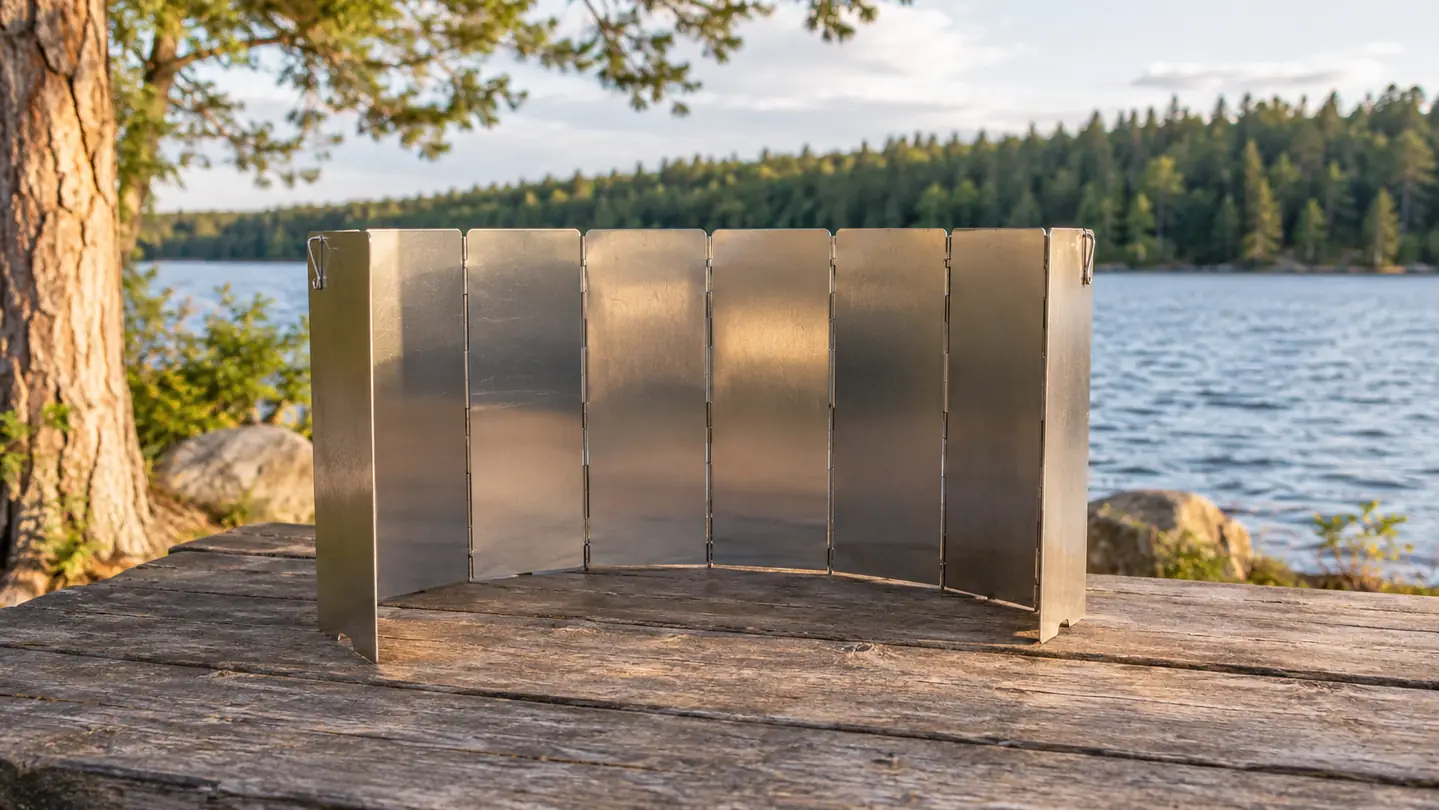
Wind is the one thing I would change. The flame sits up on the burner and takes the breeze straight on, and a gusty afternoon at a lake can turn a rolling boil into a sulk. There is no shield built into the stove. My answer is a folding metal windscreen, the kind that comes flat and bends around three sides, and I set it on the windward side before I light anything. It cost very little, it folds flat, and it turned the stove from a fair weather friend into something I trust on a beach.
The windscreen earned its keep last spring at a campground on the coast, where the wind came off the water in a steady push all afternoon. Without the shield the flame leaned and fluttered and the water never came to a real boil. With it, three sides folded around the burner, the flame stood up straight and I made a pot of clam chowder that took twenty five minutes start to finish. The shield folds to the size of a book and lives behind the case in the bay.
Weight and size are where it earns its place in a small rig. It weighs 3.1 pounds and measures 13.5 inches long by 11 inches wide by 4.45 inches tall. That fits on the shelf in the outside bay with room to spare, and I can carry it from the bay to the picnic table in one hand along with the coffee pot in the other. In a motorhome where we watch what we add, 3.1 pounds is nothing. The carry case is a basic plastic shell, not a padded bag, and it has done its job.
One caution from experience. The stove body gets hot, and the area under it gets hot too. I do not set it directly on a plastic folding table without thinking about it first. A concrete pad, a metal picnic table, or a wooden one with a trivet or a folded towel underneath is what I use. Gas One includes a one year warranty, which we have never needed to test, and I would rather keep it that way.
What One Burner Will Not Do
It is a single burner, so it cannot boil pasta and sauté garlic at the same time. In our rig that has not mattered, because the motorhome has its own two burner cooktop inside and the Gas One is the outdoor option or the backup. But if this were my only stove, I would be frustrated by the middle of a serious meal. Think of it as one good burner that goes anywhere, not a kitchen.
It also is not a grill and not a griddle. There is no lid, no large flat surface, and no way to cook a steak the way Ray likes it. What it does is boil, simmer, fry in a skillet and keep a pot of stew going, all at a picnic table, on fuel you can buy almost anywhere. For us that is exactly the job we needed done, and it has done it a few hundred times now.
What I Liked
- Lights with a click from the piezo ignition, no lighter needed in normal weather
- Runs on butane canisters or a 1 pound propane cylinder with the included adapter
- 3.1 pounds and 13.5 by 11 by 4.45 inches, so it stores on a bay shelf without crowding anything
- 8,000 BTU brings a quart of water to a boil quickly for a stove this size
- Carry case has survived two years of being shoved in next to a cast iron Dutch oven
Where It Falls Short
- No built-in wind protection, so you will want a folding windscreen
- Piezo ignition can need a second or third click in damp or cold conditions
- Low end of the heat dial is too hot for melting butter or holding a delicate sauce
- One burner only, which limits a full meal cooked entirely outdoors
Over six weeks last fall I cooked 41 meals on it at picnic tables from Bend to Bakersfield, and it lit on the first click 38 of those times.
Who This Is For
This stove is for the camper who wants a real flame outside and does not want a second mortgage of storage space to get it. It suits a couple in a small motorhome or trailer, the way it suits us, who want to keep the heat and the cooking smells out of the living space in summer. It suits someone who sometimes has butane in the cupboard and sometimes has propane in the bay and does not want to think about which stove matches which fuel. It suits anyone who has stood at a picnic table in the wind trying to get a wet match to light.
It also suits the person who wants a backup burner for the day the rig's own cooktop quits, or the power goes out at the house in Salem, which has happened to us twice. A single burner that stores flat and runs on a cylinder the size of a coffee can is a reasonable thing to keep in the garage.
Who Should Skip It
Skip it if you want to cook a whole meal outdoors on two burners at once. You will be standing there waiting for the potatoes while the fish goes cold, and you will resent the stove for a problem it never promised to solve. Skip it if you are a weight obsessive on a long backpacking trip, because 3.1 pounds plus a fuel canister plus a windscreen adds up, and there are lighter options for that kind of travel.
And skip it if you are not willing to carry a windscreen or a heat diffuser. This stove is honest and simple, not self sufficient. Two cheap accessories turn it into something I rely on. Without them, a breezy afternoon and a delicate sauce will both give you trouble, and you will blame the stove instead of the setup.
Two years, a few hundred meals, and one scuffed corner on the case
If you want one reliable burner that packs into a 3.1 pound case and runs on either fuel, this is the one that has stayed in our storage bay.
Amazon Check Today's Price on Amazon →