The Lodge Cast Iron Double Dutch Oven came into our rig because of a drawer. Our 2019 Class C has exactly one narrow galley drawer for cookware and one overhead cabinet, and by the fall of 2024 that drawer was already full of a detachable-handle set that earns its space every trip. What I wanted was a single heavy pot that could cover stew, chili, bread and a cobbler, live on the floor of the outside storage bay instead of in the drawer, and not care that the last two miles into a national forest campground are washboard the whole way. What I got was 13.1 pounds of cast iron with a lid that lifts off and works as a skillet. Nearly two years later it is the piece I reach for about once a week, and the piece I grumble about every single time I carry it from the bay to the picnic table.
Here is the short version before the long one. The Lodge double Dutch oven is a round, cast iron pot, 5 quart capacity, 4.75 liters, 11.15 inches across and 5.55 inches tall, with two small handles on the body and two on the lid. It is rated oven safe to 315 C and it carries a lifetime limited manufacturer's warranty. It is heavy enough that I have to plan where it lives in a 25 foot rig. It is also the most forgiving thing I cook with, at a campsite or in my kitchen back in Salem. If you have ever scorched a stew on thin metal because the flame on a portable stove would not sit still, you already understand why the weight is the point.
The Quick Verdict
One pot that covers stew, bread and cobbler for two people, if you can live with 13.1 pounds and a wash-and-oil routine every single time.
Amazon Check Today's Price →The Pot That Earns Its Place on the Bay Floor
5 quart cast iron pot, a lid that turns into an 11.15 inch skillet, oven safe, lifetime limited warranty. It has cooked roughly once a week in our rig since the fall of 2024, and it still seats flat.
Amazon Check Today's Price on Amazon →How I've Used It
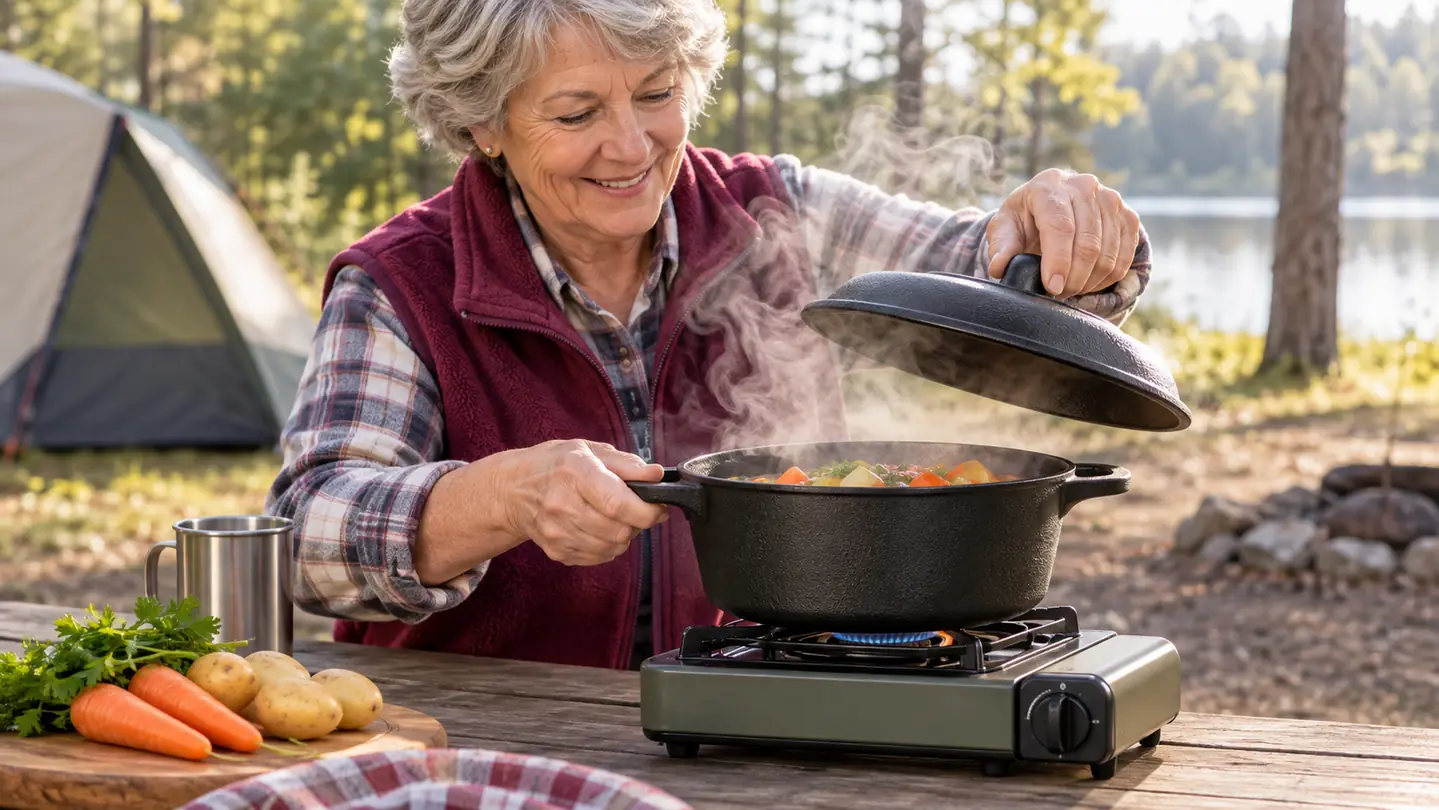
We bought it in the fall of 2024. It comes out about once a week, sometimes twice when the weather turns and we spend more of the day inside the rig. Ray handles the fire, I handle the pot. If he has coals going on the grate, that is where the Lodge sits. If it is raining sideways, or if the county has a fire restriction in place, I set the pot on the Gas One GS-3400P single burner at the picnic table with a folded piece of aluminum for a windscreen. Those are the only two heat sources it has seen on the road, because our rig has a two-burner propane cooktop and a small microwave and nothing else.
The food list is ordinary, and that is the whole point. Beef stew with carrot, onion and potato. Chili that starts with browning chunks of chuck. No-knead bread, which is the thing this pot does better than any piece of cookware I have owned in fifty years of cooking. Peach cobbler in July when the roadside stands open up. Baked beans. A small whole chicken once, and that one filled it right up to the lid and taught me that 4.75 liters is generous for two people and not much more than that.
Cleanup is where an RV decides which cookware it will tolerate, and this is the part people underestimate. The maker says hand wash only, and I would not argue with that even if it said otherwise, because our fresh tank and our gray tank are both finite. I use about two quarts of hot water, a nylon scraper and a rag. Then the pot goes back on a low flame for three or four minutes to dry, and I wipe a thin film of oil around the inside with a paper towel. Call it ten minutes from the last bite to the pot going back into the padded bag.
What the Two-in-One Lid Actually Buys You
The lid is a skillet. Not a lid with a knob on top, an actual shallow pan, 11.15 inches across, with two small handles at the rim. Flip it over and you have a surface for browning, searing, or cornbread. This is the feature I use most and the one that made the sale. On the road I have one place to set a hot pan and one pot's worth of cleanup water, so a piece that does two jobs is worth twice as much to me as a piece that does one. It is also why I stopped carrying a separate skillet in the first place.
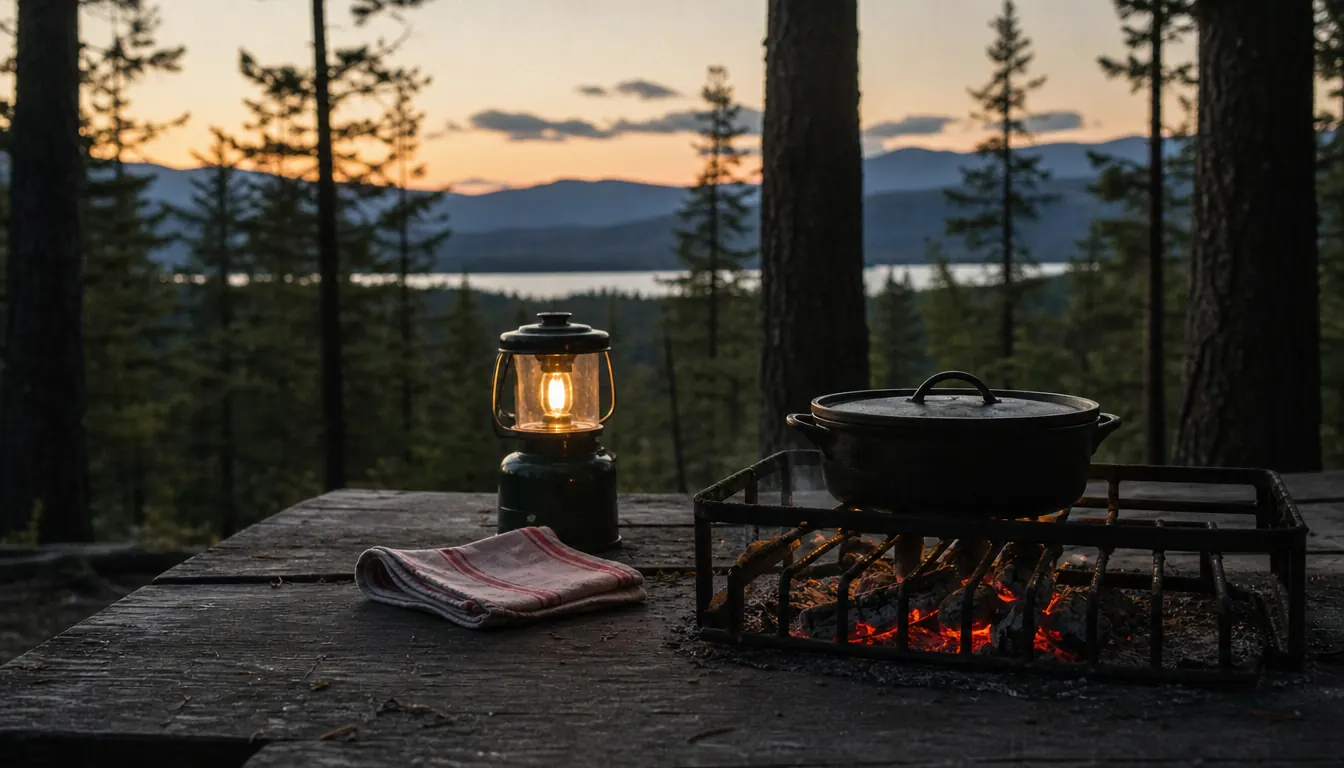
Here is how it works in practice. I brown the chuck in the lid-skillet out on the outdoor burner, working in batches small enough that the pieces sear instead of steam. Then I tip them into the pot, add onion and liquid, and set the lid back where it belongs. The browning surface becomes the lid again and there is no second pan to scrub at the water jug. If you are picturing this at a picnic table with a lantern hanging off the corner of the rig, you have the picture right.
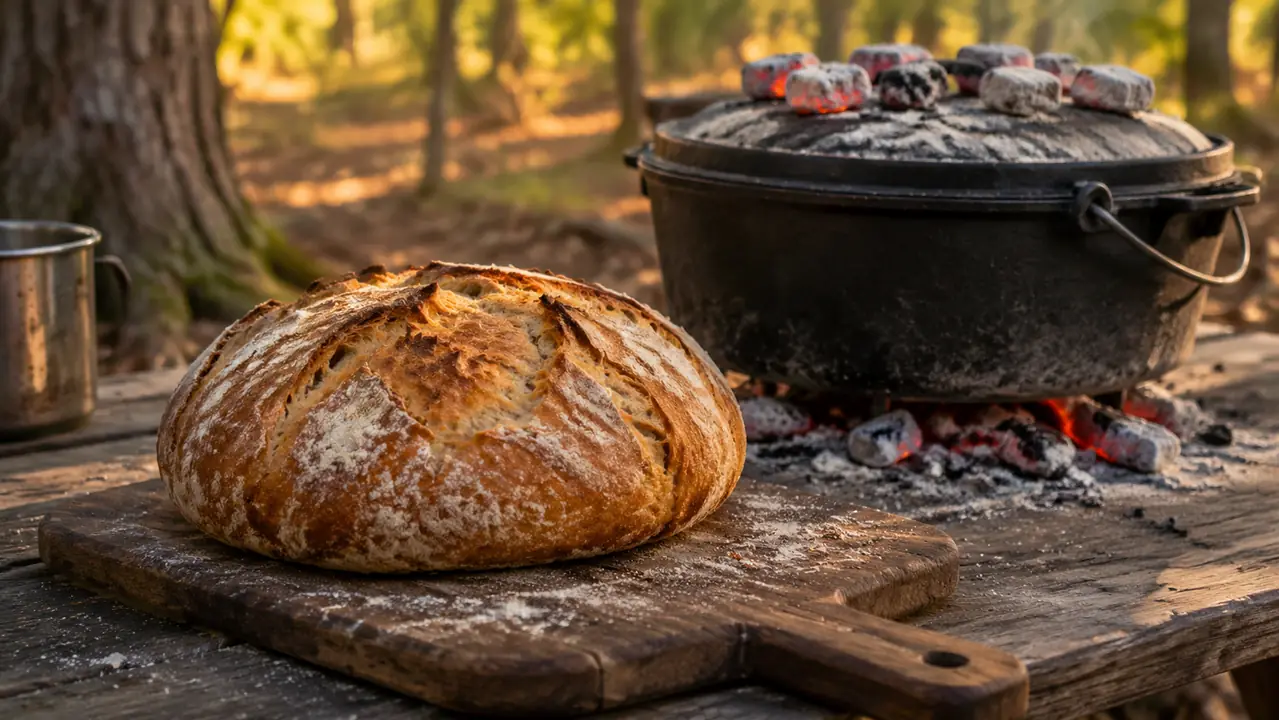
Baking is the other half of it. The pot has 5.55 inches of height, which is enough headroom for a no-knead loaf that rises in a bowl and gets tipped in. I set a ring of coals under the pot and six or eight on the lid, and the bread comes out with a crust that is honestly better than what my oven at home produces. The same setup turns out a cobbler in about thirty five minutes. With a two-burner cooktop and a microwave, this is the closest thing to an oven I have without hauling an oven.
Heat, Coals, and the Rating That Matters at Home
The pot is rated oven safe to 315 C, roughly 600 F, and it comes with a lifetime limited manufacturer's warranty. That number means little at a campsite, but it matters in Salem, where I use it in the home oven for winter braises when we are off the road for a stretch. On the road the heat comes from coals or the outdoor burner, and the pot does not care which one it gets.
Coals are Ray's department and he is good at them. He spreads a bed underneath and sets a few on the lid, and the pot holds that heat so evenly that a simmer stays a simmer without any attention from me. With thin cookware on the same fire I am always chasing the flame, shifting the pot, lifting it, hunting for the spot that is not a hot spot. Cast iron takes that whole negotiation off the table. It heats slowly, it stays hot, and it gives me time to go do something else.
The outdoor burner is the weaker of the two setups and I want to be straight about that. The Gas One is a small single burner, and an 11.15 inch pot sits wider than its grate on every side. I center it carefully, keep the flame modest, and let the mass of the iron do the rest of the work. In any kind of breeze the flame wanders, so the windscreen is not optional. A big heavy pot on a small burner is not a perfect pairing. It is a workable one, and it has never cost me a meal.
Weight, Water, and Where It Rides
13.1 pounds empty, before there is a drop of stew in it. That is the honest headline and it is the first thing I would tell a friend. In a 25 foot Class C with a real cargo limit, every heavy item has to be argued for, and this pot wins the argument because it does the work of two. It rides on the floor of the outside storage bay inside a padded bag, low and toward the middle of the rig, not up high and not hanging off the back. If you are loading one of these, that placement matters more than anything else about the pot.
Water is the second cost. Hand wash only, so no soaking overnight and no dishwasher even at the house. I scrape first with a nylon scraper, wash with hot water and a rag, then dry it on a low flame. I have had exactly one bloom of rust, on the rivet area near one of the lid handles, after a damp night when I was tired and put it away slightly wet. A little steel wool, a re-oil, and it was gone. That is the entire maintenance story and it runs about ten minutes a week.
Both sets of handles get hot, and they are small enough that a folded dish towel is a better answer than a bulky pot holder. Full of chili the pot is nearer 20 pounds, so I carry it with two hands and my elbows in close. I am 67 and I manage it without trouble, but I do not carry it up a step stool, and I do not hand it to anybody across a fire. Sliding it from the table to the grate and back is the safe way to move it, and that is what I do.
What Held Up and What Still Annoys Me
Close to two years in: no cracks, no wobble, the lid still seats flat, and the interior is dark and slick from use. Nothing has chipped because there is nothing on it to chip. The even heat has held up, though that is really just a way of saying cast iron is cast iron and it does not get tired. The warranty card is in the folder with the rig paperwork and I have never needed it.
What annoys me is the same thing that annoyed me in month one. It is heavy, and the heaviest part of a camping day is often the ten steps between the storage bay and the table. The lid handles are small. The pot is slow to heat compared to the nonstick set in the drawer, so I have to start coals earlier than feels natural. And it is useless for a quick breakfast. For pancakes and eggs at seven in the morning, a flat griddle is the right tool and this is not it.
Where it sits among the rest of the gear is simple. The nonstick set handles fast weeknight meals and anything that wants a long handle. The griddle handles breakfast on the picnic table. The single burner is the heat source for both. The collapsible containers hold whatever is left of the stew. The Lodge is the one that comes out when the meal is long, the fire is going, and nobody is in a hurry. Nothing in the bay duplicates it and it duplicates nothing else, which is the only reason a 13.1 pound pot gets to stay.
What I Liked
- The lid is a real 11.15 inch skillet, so browning and simmering happen in one vessel
- Even heat on campfire coals and on a small single burner, no hot spots to chase
- 5 quart, 4.75 liter capacity is right for two people with leftovers
- Oven safe to 315 C, which makes it useful in the home kitchen between trips
- Lifetime limited manufacturer's warranty
- No chips, no cracks, no wobble after nearly two years of travel
Where It Falls Short
- 13.1 pounds empty, the heaviest cooking item in the rig
- Hand wash only, then dry on a flame and oil. Every time
- Both sets of handles get hot and they are small
- Slow to heat compared to the nonstick set, so coals go on early
- No good for a fast breakfast
- An 11.15 inch base sits wider than a small single burner grate
The lid is the reason I bought it. Flip it, brown the chuck in it, set it back on the pot, and put coals on top. One fewer pan to wash in a rig where every quart of hot water is rationed.
Who This Is For
This is for the cook who makes one long, slow meal a week and wants it to be good. If you are in a rig with limited galley storage and limited water, and you would rather carry one heavy pot than three light ones, the math works out in your favor. It suits couples, it suits a solo traveler who likes leftovers, and it suits anyone who camps where a fire ring is allowed and a bed of coals is available. It also suits the retiree who splits time between the road and a house, because the oven-safe rating means it earns its keep in the home kitchen too. If you are weighing this against an enameled pot, the tradeoff is simple: more weight and more care on one side, no chipping and a lid that doubles as a skillet on the other.
Who Should Skip It
Skip it if your shoulders or wrists make 13.1 pounds plus a full pot a bad idea. Skip it if you cook mostly quick meals, if your rig has no outside storage where a heavy item can ride low, or if your camping is mostly electric hookups and a microwave. Skip it if you are not willing to dry and oil it every single time, because a cast iron pot put away damp will find a way to tell you about it. And skip it if your stove is a small single burner and you have no fire ring, since the pot is wider than that grate and the pairing is workable rather than ideal. None of that makes it a bad pot. It makes it the wrong pot for some rigs.
If the Bay Has Room for One Heavy Pot, Make It This One
5 quart cast iron, an 11.15 inch skillet for a lid, oven safe to 315 C, and a lifetime limited warranty. Ours has handled stew, chili, no-knead bread and cobbler since the fall of 2024 without a single failure.
Amazon Check Today's Price on Amazon →